






The market and recent legislative initiatives are forcing the fashion industry to strive for innovative solutions that can reduce the social and environmental impacts of production. Among the most promising and consequently debated ones is the Digital Product Passport (DPP), a digital tool designed to provide detailed information on the history, composition and life cycle of fashion garments and accessories.
To better understand the role and relevance of the Digital Product Passport for a more sustainable fashion industry, we interviewed Francesca Rulli, CEO of Process Factory and creator of the 4sustainability system. Her answers give us an in-depth view of how this innovation can transform the way we produce and consume fashion, helping to build a more responsible and conscious future.
What need is the DPP going to fill?
Different stakeholders, distinct but interconnected needs: brands, consumers, and regulators will equally benefit from the Digital Product Passport and the data that is its essence.
The DPP will help consumers find the information they need to make more informed purchasing decisions, raising their awareness of sustainability and circular economy issues: less risk of being manipulated and less opportunity for brands to expire -consciously or not- in green and social washing.
Companies at the different links in the supply chain and brands will benefit from more trusting relationships with customers and consumers, accompanying items with information and data useful for a better understanding and evaluation of product features that are today difficult to read because they are connected to the processes through which it was made. Brands will take advantage of this to enhance their models and optimize processes for impact reduction purposes as well.
Customs and other control bodies, finally, will be able to use the DPP for compliance and regularity checks, monitoring products such as those in fashion which we know are extremely impactful also because of the important geographic distances of the related processes.
Above all, the DPP was created as a tool for circularity: the information collected will cover the entire life cycle of the product, to foster new stages after use or non-sale, to feed new recovery and recycling chains or to allocate products to different business models such as rental, second hand, repair, etc. Therefore, the data set to be managed will also cover instructions and advice on maintenance, repair, recycling, and so on.
What data and information should be reported on DPPs?
The data fields have not yet been defined exactly. Work is underway to define guidelines and pilot projects at the European level coordinated by Cirpass to test the gradual implementation of an interoperable DPP system that complies with international standards. According to forecasts, we will have DPP-equipped products on the market from June 2027, so we are talking about collections made a year earlier.
The implementation rules of the Ecodesign for Sustainable Products Regulation, with the adoption of PDP at the European level, will not be ready until the end of this year. That said, the regulations already contain some important guidance on the type of information that DPPs will have to report. The ultimate goal is that by 2030, textile products entering the EU market will be durable, repairable and recyclable, free of harmful substances, and made with respect for social rights and the environment. And that production chains are monitored in terms of environmental and social risks.
Digital Passports of fashion products will contain a great deal of information that it will be the extended responsibility of the manufacturer to make available. Access will be regulated based on the stakeholder, meaning that data will be “stored” in distinct digital spaces depending on the purpose for which it is collected. Some information will be accessible only to operators of recycling supply chains and alternative businesses, others only to customs and regulators. Consumers will have access to information such as the product’s composition, its estimated average lifespan, how it is used and maintained, the possible release of microplastics, water and energy consumption and CO2 emissions referable to the different production stages, end-of-life management methods, toxic and harmful chemicals, information for recovery and reuse… And again, in terms of transparency, the geography of the manufacturing processes: meaning that consumers should be able to reconstruct at least the main steps that a product has gone through before it reaches the store.
The link between Digital Product Passport and CSDD, which obliges the manufacturer to Due Diligence on its supply chains, is particularly evident here. But it has to be said that all European sustainability initiatives combine to build an extremely coherent and interconnected body of legislation: from the Ecodesign for Sustainable Product Regulation (ESPR), to the Corporate Sustainability Reporting Directive (CSDD), the Packaging and Packaging Waste Directive (PPWD), the EU Deforestation Regulation (EUDR), the Corporate Sustainability Reporting Directive (CSRD), to the rules on chemical restrictions and the twin directives combating green washing.

What kind of challenges will companies required to collect this data face?
Every new technology also presupposes new challenges, especially when the areas of application are important as in the case of the Digital Product Passport. Whoever puts the product on the EU market-it is worth reiterating-will be legally responsible for collecting, providing and updating the required information, which calls on brands to equip themselves to be ready at all times to collect, provide, update and verify all the information required by the tool.
We are well aware, however, that obtaining this information involves collaboration between brands and companies in the supply chain, which are many and often small in size and will have to deal with structured paths of data collection and analysis and digitization. There will be instances, therefore, where getting the data for DPP will need significant adjustments and investment in technology infrastructure and in training and culture.
A parallel that can perhaps help to understand is with accounting systems and the digitization of tasks that used to be done by hand. Here, the concept is the same, only elevated to the highest power, because we are talking about individual products, individual items, not just companies. It is a cultural revolution, the one we have to bring forward: on the technology front, on the method, on the skills front, on the transparency and collaboration front.
The good news is that the methodologies and tools to support them are there. I’m thinking first and foremost of the 4sustainability system of due diligence, collection and validation of supply chain impact data, and platforms like The ID Factory for product traceability and transparency to DPP data management. It is a matter of starting early, to have a way to spread the procedures, methods and technologies and thus be systemically ready for the important challenge that the regulations are stimulating.
Will the PLR really guide people’s purchasing behavior?
I am optimistic, especially looking to the future. It is clear there is a generation gap: young consumers are predisposed “by birth” to digital, and sensitivity to sustainability issues, according to almost all studies, increases the lower the age of respondents. The profits of giants like Shein or Temu, however, unfortunately show that good intentions rarely translate into consistent purchasing behavior. I believe this is partly due to the difficulty of choosing responsibly due to a lack of supporting information. There was talk of a cultural revolution … and this is in its own right and requires time and appropriate tools available in the market. The Digital Product Passport has all the characteristics to be one of those tools: a real accelerator of change that all players in the system -businesses and consumers in the lead- will come to embrace with the support of educational campaigns that are up to the task.
Sustainability Report
The European Union, governments, international communities, and citizens themselves are increasingly demanding that businesses conduct their operations in a more ethical and socially and environmentally responsible manner. Above all, they demand to be informed about the associated performances.
Timely, periodic, and transparent communication of initiatives and commitments by companies has thus become one of the major requests from stakeholders, to which companies have found themselves having to respond by increasingly focusing on the preparation of the so-called Sustainability Report.
The Sustainability Report, as a product of the reporting process, is the document through which a company accounts for its environmental, social, and economic sustainability initiatives and performances. It is the document, in other words, through which the company communicates its actions to protect the environment, the approach it adopts towards its workers, its relationship with the territory and the community…, the way it generates value and distributes it to its stakeholders.
Thanks to the information contained in Sustainability Reports prepared through reporting standards, both internal and external stakeholders are able to form an opinion and make conscious decisions.
The Sustainability Report is not only an accounting document that shows the results achieved by the company during a given financial year. It is also a tool that relates economic and financial performance to the declared objectives in the social and environmental fields. Furthermore, it provides the management methods for the sustainability aspects most relevant to the company itself and its stakeholders, in terms of values, principles, policies, and management systems, casting a forward-looking perspective on commitments and future objectives towards sustainable development.
Why can’t the Made in Italy label be considered synonymous with ethical and sustainable product?
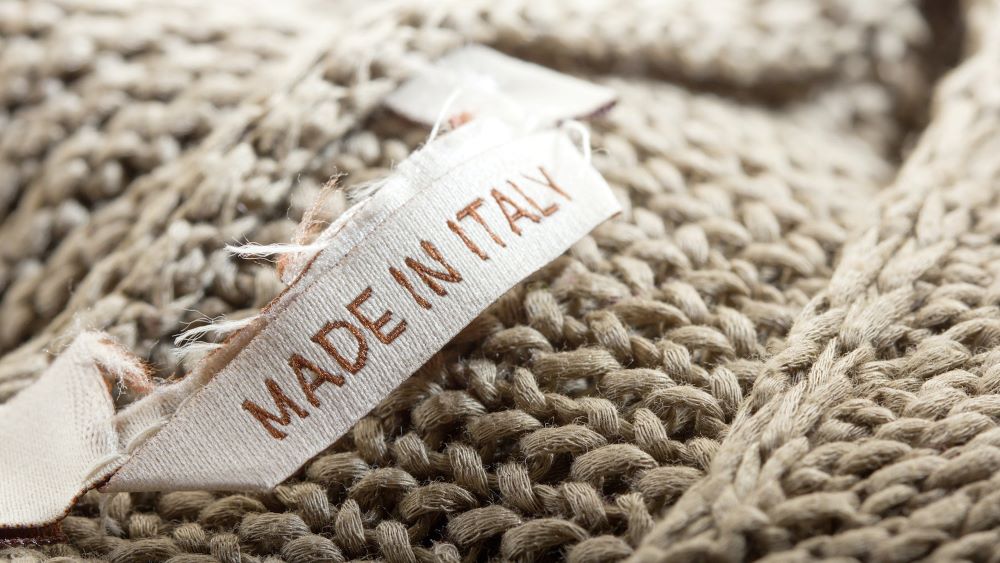
In the collective imagination, Made in Italy means craftsmanship, quality, style, high-end product… All of this is correct, but sustainability is not implied: Made in Italy does not make processes transparent, does not measure impact, does not provide for controlled supply chains in terms of environmental and social risks, does not assume any logic of circularity. The definition has to do with other typical aspects of the product, but not with its processes.
When marketing also associates sustainability concepts with this definition, it is misusing it. The fact that a garment is Made in Italy, to take one example, does not necessarily imply that all processes took place in Italy, that workers’ rights are respected or environmental risks managed according to the law. Therefore, it is necessary that next to the words Made in Italy, there should be information about production methods, supply chains, impact… so that the product is recognizable not only for its quality, but also for its positive attributes of sustainability.
Reducing environmental impacts (chemicals, water, energy, air emissions, waste…), improving well-being in organizations, traceability and sustainable materials are among the dimensions that the 4sustainability® system oversees to protect this information. There are now more than 2,000 companies that have started measurement and data collection in Italy, of which more than 700 have completed the measurement phase and started impact reduction paths. More than 300 have obtained 4sustainability validation of the data. Each of these supply chain companies is therefore ready to contribute their information to the brands’ Digital Passports, with a good competitive advantage over those who have yet to leave or will be found unprepared.
Our aim is exactly to support supply chains in this challenge, to help them exploit the advantage of production with reduced environmental impact and authentically Made in Italy and beyond.
What do you think will be the most critical fashion or material products for DPP?
In an absolute sense, there is no one product more problematic than another. If anything, the critical issues in collecting the data needed for PDP have to do with the complexity of the product at the level of the mode of production and mix of materials – so many fibers mixed together, so many different materials and/or elements, so many chemical processes, widespread use of glues and hazardous substances – and at the level of the geographic distribution of the processes needed to make it: it is one thing to map the information of a garment made in the same area by a short supply chain, another to map a garment that requires so many steps performed in multiple parts of the world. It is also true that complexity can be compensated for by a collaborative supply chain with good data governance….
I am convinced that the key is in intelligent product design, which is also useful in increasing the circularity index. This, in essence, is Ecodesign: who are my suppliers and where do they operate? what fibers or fiber mixes allow me to reduce production waste? what materials are best to choose to decrease production impacts? how can I optimize the cutting process? how can I give another life to the product? Making choices consistent with these kinds of questions means setting the stage for PDP-friendly products.