



Set to debut in Milan, the exhibition produced by Trama Plaza will unfold the social dimension of sustainability in Italian fashion manufacturing through a creative reinterpretation of work uniforms. Almost all the featured companies are 4sustainability®, matched with an equal number of fashion designers.
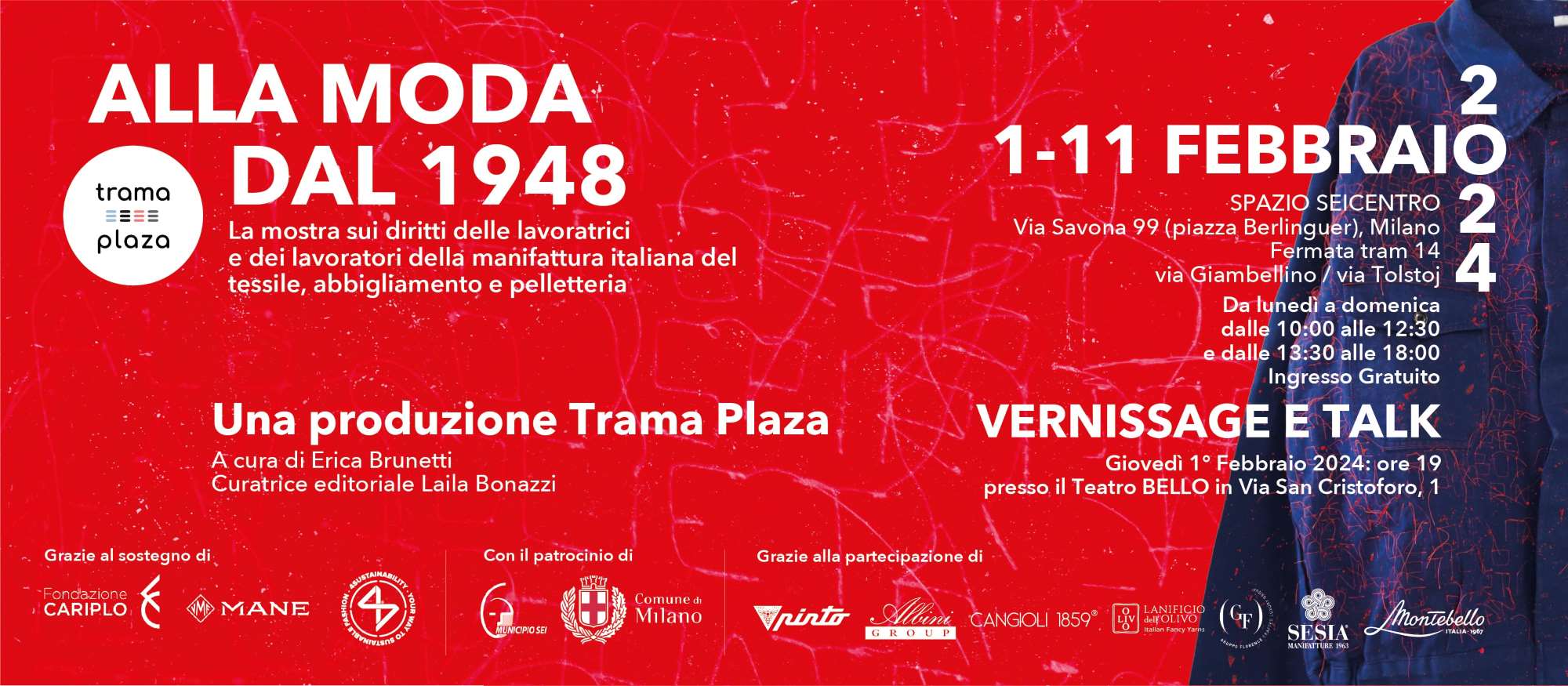
On Thursday, February 1, 2024, the non-profit association Trama Plaza, dedicated to promoting sustainable fashion through art, will inaugurate the exhibition Alla moda dal 1948 [Fashionably Since 1948]. The showcased works, a series of work uniforms reimagined by Italian designers, will be on display until Sunday, February 11, at the Seicentro Space in Milan.
Designers, Companies, and the Jury
The initiative aims to highlight the best practices of 7 Italian companies in the textile, clothing, and leather manufacturing sector engaged in a structured transition to social and environmental sustainability, also through the 4sustainability system. The exhibited works are reinterpretations of work uniforms provided by each company, serving as a genuine manifesto of responsibility and attention to the well-being of workers.
An equal number of fashion designers, among the most renowned in the sustainable fashion landscape – Bennu, Blue of Kind, Cavia, _DENNJ_, flavialarocca, Giorgiandreazza, and ZEROBARRACENTO – have been paired with the companies to reinvent their uniforms through an artistic tailoring process of upcycling.
The uniforms also take center stage in a creativity competition, where one of the designers will be awarded by a jury of experts: Monica Del Grosso (Moleskine), Anna Detheridge (Connecting Cultures), Mélanie Duhamel (Mane), Silvia Gambi (Solo Moda Sostenibile), Tania Gianesin (Moleskine), Deborah Lucchetti (Abiti Puliti), Francesca Rulli (Process Factory), Sara Sozzani Maino (Fondazione Sozzani), and Marina Spadafora (Fashion Revolution). On the day of the inauguration, the jury members will also take part as featured speakers in a talk moderated by Laila Bonazzi.
Since 1948
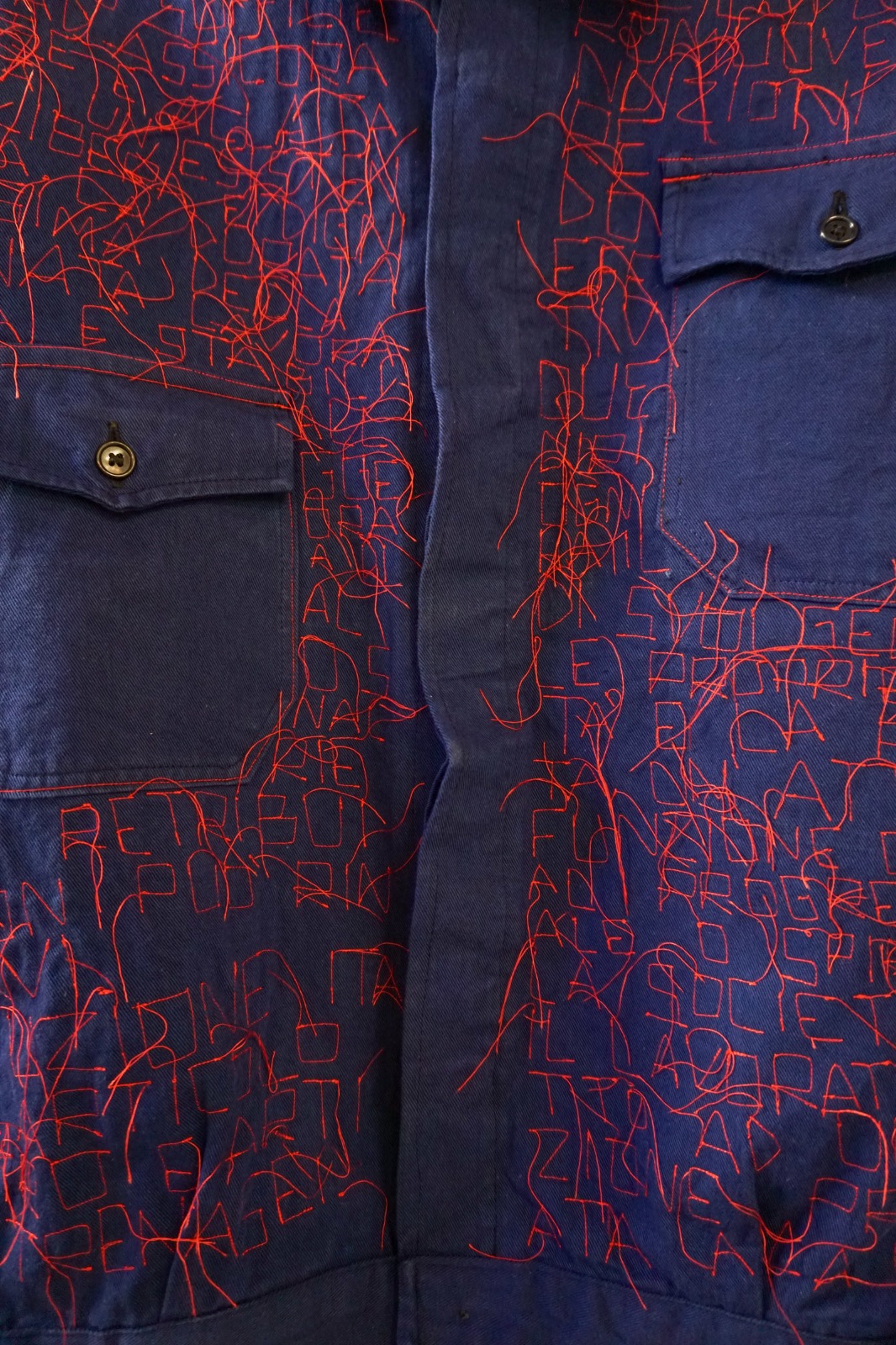
The idea for the exhibition originated from an artwork created by fashion designer Irene Labella, a member of the Trama Plaza collective. On an old work jacket from Montedison, purchased at a market in Terni, Irene hand-embroidered two articles from the Italian Constitution. The artwork, titled Since 1948 in reference to the year the Constitution came into effect, is an integral part of the exhibition, displayed outside the competition alongside other works.
“After working on it, I realized I didn’t want to sell the jacket as just another piece,” shares Irene. “I wanted to tattoo something on this jacket, I wanted to make it a manifesto for sustainability linked to the conditions of workers. I embroidered two articles from the Italian Constitution, the 4th and the 36th: the first mentions the right to work, the second a fair and dignified remuneration”.
“This jacket,” explains Erica Brunetti, founder and president of Trama Plaza, “perfectly embodies the values of our association and has been a natural inspiration for an art exhibition. Firstly, it is a product of upcycling, a process of enhancing an existing garment through creativity – a move against the wastefulness of fashion that Trama Plaza aims to promote. Additionally, it sheds light on an aspect of sustainable fashion often overlooked: the rights of workers who, in a long and complex supply chain, craft our fabrics, clothes, and accessories. All our clothing is handmade by someone: maintaining a high level of attention to these individuals and their rights is part of Trama Plaza’s mission.”
Value to Excellence
The 4sustainability seal at the Milan exhibition, unique in its kind, is evident primarily in the selection of companies that have joined the initiative. These companies have offered their uniforms and opened up about their commitment to sustainability, which includes a focus on their people and well-being.
Almost all the involved enterprises – seven standouts in Italian textile, leather, and clothing manufacturing – adopt the 4sustainability assurance system to implement tangible sustainability projects and transparently communicate their performances to the market.
Gruppo Florence is an integrated production hub for luxury brands, bringing together numerous companies in textiles, leather, clothing, footwear, and intermediate processing. The Group has embarked on a sustainability journey involving all its companies – an ambitious project demonstrating uncommon vision and managerial intelligence. 4sustainability stands alongside them with a structured action plan for environmental impact reduction and the constant measurement of social responsibility to showcase its real value to the market.
A leader in creating fancy yarns for industrial knitting and needlework, Lanificio dell’Olivo was among the first companies to initiate its sustainable transformation with 4sustainability. With a history of commitment and consistency, its current management is advancing a development strategy that is increasingly cross-cutting and engaging for its entire supply chain.
Specializing in high-end yarns, Manifattura Sesia is exemplary for its integration with the territory, a multidimensional approach to sustainability – with four activated 4sustainability pillars – and an interpretation of sustainability as a corporate culture. Their commitment identifies value in quality and protects, saves, and recycles resources.
The first 4sustainability company in the silk district of Como, Achille Pinto’s collaboration began with the CHEM protocol and has been tested over time through constant internal training activities. Their commitment to sustainability now includes addressing advanced themes such as process traceability and data management for constructing a Digital Product Passport.
Synonymous with precious fabrics since 1876, Albini Group produces textiles to the highest quality standards through cutting-edge technologies. As innovation and sustainability are two sides of the same coin, Albini’s path is naturally sustainable in both environmental and social terms. The collaboration with 4sustainability follows suit.
Handcrafting leathers for the most prestigious fashion & luxury brands, Conceria Montebello’s sustainability focus lies in process traceability and transparent communication to the market as the main route for change.
A vertical industrial reality operating for five generations in the textile district of Prato, Cangioli 1859 has long incorporated sustainability into its corporate culture and strategies. This is evident in its early adoption of the 4sustainability system – a model centered on data collection and performance measurement.
“In the last 10 years,” emphasizes Francesca Rulli, CEO of Process Factory and Founder of 4sustainability, “the fashion industry has undertaken a path to reduce environmental and social impacts, and today we see the results: significant strides have been made in revising production processes, and 4sustainability companies represent an interesting case of measurement. Today, we must also help the consumer grow in awareness, so as to reward truly sustainable productions through purchasing choices. Contributing with all our energies to an initiative like this offers us the unmissable opportunity to highlight sustainable practices, which are only truly sustainable if they reduce the impact of materials and processes and reinvent products to extend their lifecycle.”